feature guidelearnersparentsteachers
CBC Curriculum Kenya: Complete Guide & Overview
A complete guide to Kenya's Competency-Based Curriculum (CBC) covering strands, outcomes, KICD alignment, and stages from PP1 to Grade 12.
By Nehiju Learn·1 September 2026·47 views
Share via WhatsApp
Send this to your study group, teacher group, or parent community
Only share useful content. Don't spam.
CBC Curriculum Kenya: Complete Guide for Students, Parents, and Teachers
The transition to the Competency-Based Curriculum (CBC) in Kenya marks a transformative shift in the national education system. Implemented under the guidance of the Ministry of Education and the Kenya Institute of Curriculum Development (KICD), CBC shifts the focus from purely rote learning toward holistic talent development, practical application, and core competency building.
Understanding CBC Structure: PP1 to Grade 12
The Kenyan CBC framework is structured into three main levels encompassing educational cycles from early childhood to senior secondary:
Strands, Sub-Strands, and Specific Learning Outcomes
Under CBC, syllabi are organized into learning areas, strands, and sub-strands. Rather than focusing solely on memorizing textbook definitions, each sub-strand defines explicit Specific Learning Outcomes (SLOs) categorized across Knowledge, Skills, and Values.
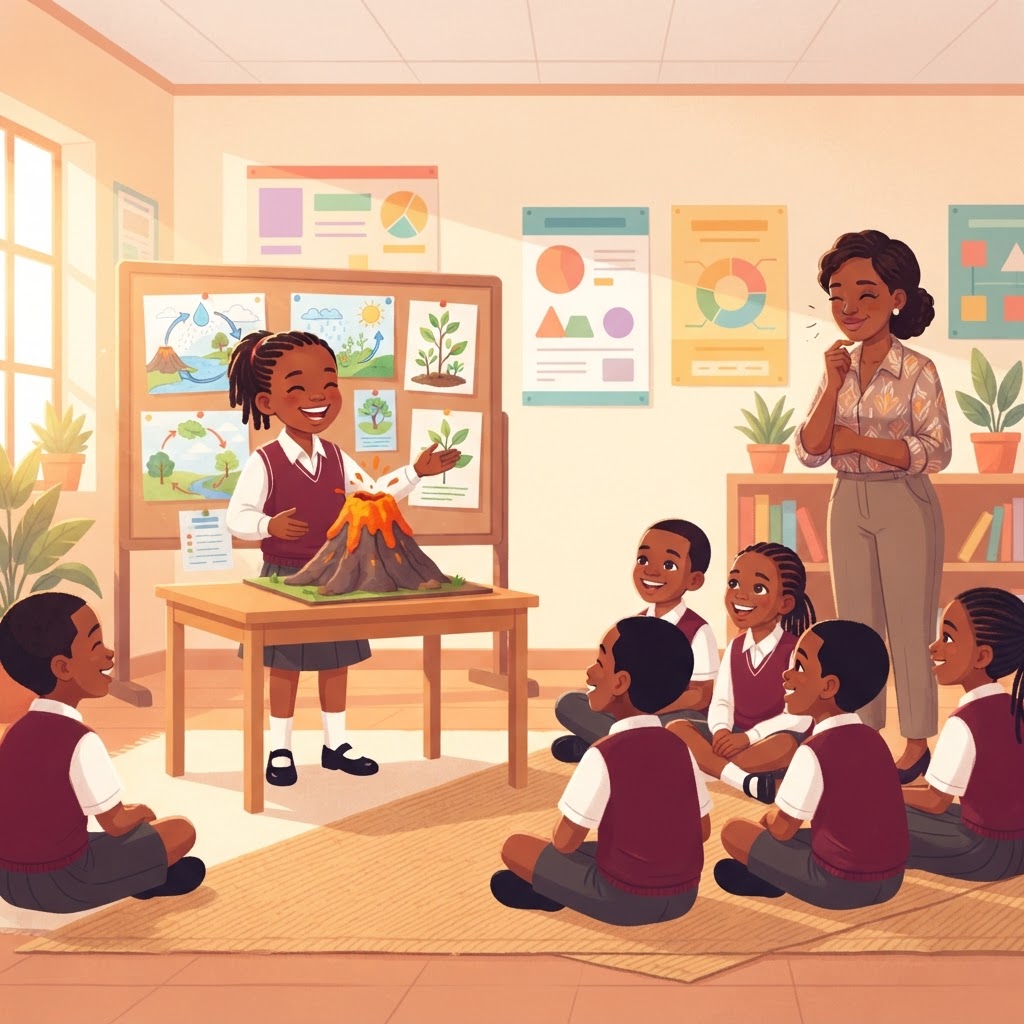
For instance, a Grade 5 Science strand on Agriculture guides learners through practical soil conservation activities, fostering environmental awareness alongside factual understanding.
Assessment Methods and KICD Alignment
Assessment in CBC differs fundamentally from traditional testing. Instead of relying solely on end-of-year examinations, CBC utilizes continuous Formative Assessment alongside Summative Assessment.
Teachers track student progress through observational checklists, portfolios, practical rubrics, and project-based assignments. Official national assessments administered by KNEC evaluate both classroom-based evidence and standardized tasks to measure competency attainment accurately.
Supporting CBC Learners at Home and School
Parents and teachers play vital collaborative roles in CBC success. Digital platforms like Nehiju Learn bridge classroom instruction and home practice by providing fully aligned digital notes, interactive quizzes, and revision tools tailored to KICD guidelines.
Frequently Asked Questions
### What does CBC stand for in Kenyan education?
CBC stands for Competency-Based Curriculum, an educational framework introduced in Kenya to emphasize practical skills, core competencies, and values.
CBC stands for Competency-Based Curriculum, an educational framework introduced in Kenya to emphasize practical skills, core competencies, and values.
### How are students assessed under the CBC framework?
Students are evaluated through continuous formative assessments, practical projects, portfolios, and national summative assessments coordinated by KNEC.
Students are evaluated through continuous formative assessments, practical projects, portfolios, and national summative assessments coordinated by KNEC.
### Which grade levels does the CBC curriculum cover?
CBC covers early childhood education through secondary school, spanning Pre-Primary 1 (PP1) all the way to Grade 12.
CBC covers early childhood education through secondary school, spanning Pre-Primary 1 (PP1) all the way to Grade 12.
Master every grade level with ease. Ready to dive into the curriculum? Browse CBC Curriculum on Nehiju Learn today.
Key Differences Between the 8-4-4 System and the CBC Curriculum Kenya Guide
Understanding the structural shift from 8-4-4 to CBC helps parents and educators adapt to new learning expectations. This cbc curriculum kenya guide highlights the fundamental contrasts between the two frameworks:
Junior Secondary School (JSS) Transition and Learning Areas
Junior Secondary School (Grades 7, 8, and 9) serves as the bridge between primary foundational learning and senior secondary specialization.
### Core JSS Learning Areas
Sciences & Mathematics: Integrated Science, Health Education, Mathematics, and Agriculture & Nutrition.
Humanities & Social Sciences: Social Studies, Life Skills Education, and Religious Education (CRE/IRE/HRE).
Technical & Creative Arts: Pre-Technical Studies, Business Studies, Computer Science, and Creative Arts & Sports.
Languages: English, Kiswahili or Kenya Sign Language, and Foreign/Indigenous language options.
During JSS, students build broad exposure across these areas before choosing specialized career pathways—STEM, Social Sciences, or Arts & Sports Science—upon entering Grade 10 Senior School.
Practical Step-by-Step Guide for Parents Supporting CBC Home Learning
Parental involvement is essential under CBC, but parents are not expected to do the homework for their children. Follow this practical guide to support home learning effectively:
Frequently Asked Questions
What does CBC stand for in Kenyan education?
CBC stands for Competency-Based Curriculum, an educational framework introduced in Kenya to emphasize practical skills, core competencies, and values.
How are students assessed under the CBC framework?
Students are evaluated through continuous formative assessments, practical projects, portfolios, and national summative assessments coordinated by KNEC.
Which grade levels does the CBC curriculum cover?
CBC covers early childhood education through secondary school, spanning Pre-Primary 1 (PP1) all the way to Grade 12.